

4-5 June 2026, New Delhi
A two-day hands-on training programme on ‘Residual Pesticide Analysis’ was successfully organised by the All-India Network Project on Pesticide Residues & Contaminants (AINP-PR&C), ICAR-Indian Agricultural Research Institute , New Delhi, in collaboration with M/s Shimadzu India Pvt. Ltd., during 4-5 June, 2026. The programme aimed to enhance the technical knowledge and practical skills of participants in the field of pesticide residue testing and food safety.
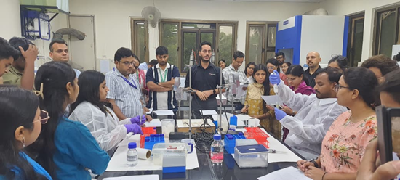
Dr Ch. Srinivasa Rao, Director, ICAR-IARI, inaugurated the training programme and emphasized on the critical role of pesticide residue testing in supporting sustainable agricultural practices, ensuring food safety, and facilitating compliance with national and international standards. He congratulated Dr Vandana Tripathy, Coordinator, AINP-PR&C, and M/s Shimadzu India Pvt. Ltd. for organising the training programme under the Public–Private Partnership (PPP) mode, which fostered industry–institution collaboration and provided participants with exposure to contemporary technologies and best practices in pesticide residue analysis.
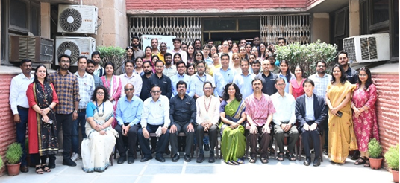
The training programme brought together more than 50 researchers, scientists, chemists, scientific and technical officers, and laboratory personnel involved in pesticide residue testing from various government departments and private laboratories. During the programme, participants received comprehensive training and hands-on exposure to the principles and methodologies of pesticide residue analysis, including sample preparation, extraction, clean-up procedures, instrument operation, quality assurance, and interpretation of analytical results.
The experts demonstrated standard operating procedures and highlighted the importance of generating reliable analytical data for food safety assessment, regulatory compliance, and fixation of Maximum Residue Limits (MRLs).
(Source: ICAR-Indian Agricultural Research Institute, New Delhi)


फेसबुक पर लाइक करें
यूट्यूब पर सदस्यता लें
X पर फॉलो करना X
इंस्टाग्राम पर लाइक करें