


19 August 2026, New Delhi
A delegation of the Agricultural Development Committee of the Madhya Pradesh Legislative Assembly visited the ICAR-Indian Agricultural Research Institute, New Delhi, today to gain insights into the Institute’s research, technologies and strategies for promoting sustainable and resilient agricultural systems.
Dr Ch. Srinivasa Rao, Director, ICAR-IARI, New Delhi welcomed the delegation. The programme commenced with the welcome of the visiting delegation by Dr R. N. Padaria, Joint Director (Extension), ICAR-IARI, followed by opening remarks by Dr Ch. Srinivasa Rao, Director, ICAR-IARI, and Shri Thakur Das Nagwanshi, Chairman, Agricultural Development Committee, Madhya Pradesh Legislative Assembly. The introduction of delegates and ICAR-IARI scientists provided an opportunity for interaction and exchange of views on contemporary agricultural priorities.
In his address, Dr Rao, highlighted the achievements and strategies of the Institute for promoting sustainable agri-food systems. He discussed key agricultural issues and priorities of Madhya Pradesh and emphasised the potential of ICAR-IARI technologies and expertise to contribute towards addressing these challenges. He particularly highlighted the Institute’s high-yielding, climate-resilient and biofortified varieties, and their potential suitability for the Madhya Pradesh region.
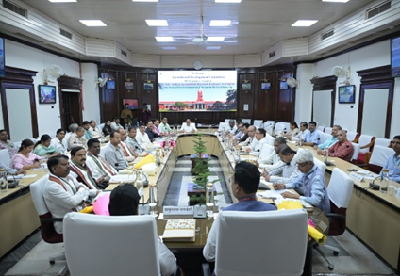
Dr Rao emphasised that achieving the vision of Atmanirbhar Bharat requires a strong focus not only on food security but also on nutrition security. He highlighted the importance of developing and promoting technologies that contribute to improved nutritional outcomes along with enhanced agricultural productivity. He also mentioned the various initiatives and campaigns undertaken by ICAR-IARI in Madhya Pradesh for the benefit of farmers.
Shri Thakur Das Nagwanshi, Chairman, Madhya Pradesh Legislative Assembly, appreciated the efforts of ICAR-IARI in developing agricultural technologies and innovations. He highlighted crop residue management and use of pesticide as important challenges being faced in Madhya Pradesh and expressed the Committee’s interest in learning from the research and technological interventions developed by ICAR-IARI to address the issue effectively.
The delegation was given presentations by ICAR-IARI, New Delhi scientists on a range of important themes, including Pusa Decomposer, which accelerates the natural decomposition of crop residues and converts farm stubble into nutrient-rich organic compost within 20–25 days, thereby helping to prevent stubble burning.
The scientists also highlighted satellite-based monitoring of crop residue burning events and trends across various states, which supports the development of appropriate measures and policies for effective crop residue management. The presentations further covered high-yielding varieties for food and nutritional security, technologies for horticultural crops, plant protection technologies, and technologies for enhancing water-use efficiency. The presentations provided the delegates with an overview of the scientific approaches, technologies and innovations being developed by ICAR-IARI in these areas.
The programme also included concluding remarks by Dr C. Viswanathan, Joint Director (Research), ICAR-IARI.
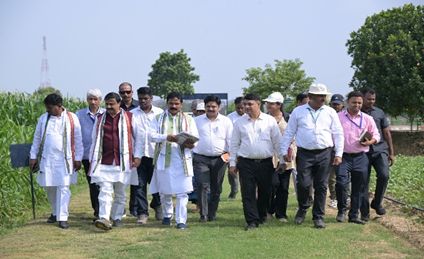
As part of the field and laboratory exposure, the delegation visited research facilities and initiatives related to Conservation Agriculture, Integrated Farming System, the Biomass Unit and Centre for Protected Cultivation Technology. The scientists associated with these areas briefed the delegates on the ongoing research and technological interventions.
The visit provided an important platform for strengthening interaction between agricultural research institutions and legislative stakeholders and for facilitating greater understanding of scientific technologies and innovations relevant to farmers and agricultural development. The interaction also highlighted the scope for leveraging agricultural research and technological interventions to address regional challenges and promote sustainable, productive and nutrition-sensitive agricultural systems.
(Source: ICAR-Indian Agricultural Research Institute, New Delhi)


Like on Facebook
Subscribe on Youtube
Follow on X X
Like on instagram