


22 June 2026, Motihari, Bihar
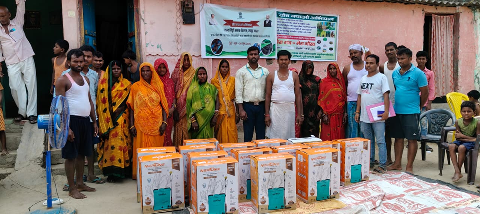
As part of the nationwide Khet Bachao Abhiyan–2026, ICAR–Mahatma Gandhi Integrated Farming Research Institute, Motihari organized a farmer awareness-cum-input distribution programme at Gullaria Village, Lakhaura Panchayat, Motihari Block, East Champaran district, Bihar. The programme integrated soil health awareness activities with support under the Scheduled Caste Sub-Plan (SCSP) to promote sustainable, climate-resilient, and integrated farming systems among rural households.
The programme focused on strengthening farmers’ understanding of soil health restoration, green manuring, crop diversification, balanced fertilizer use, and Integrated Farming Systems (IFS) as practical approaches for improving farm productivity, profitability, and resilience to climate variability.
Initiating the technical discussions, the speakers briefed participants on the objectives of the Khet Bachao Abhiyan and the SCSP initiative. It was emphasized that Integrated Farming Systems provide an effective strategy for reducing production risks, enhancing farm income, improving resource-use efficiency, and strengthening climate resilience. Farmers were encouraged to integrate crops, livestock, horticulture, and other farm enterprises to achieve sustainable livelihood security.
Addressing the gathering, the speakers highlighted the importance of balanced fertilizer use, soil-test-based nutrient management, biofertilizers, biopesticides, organic manures, and crop diversification for restoring soil health and reducing excessive dependence on agrochemicals. They stressed that healthy food begins with healthy soils and called upon farmers to adopt sustainable agricultural practices for long-term productivity and environmental sustainability.
During the technical session, scientists explained the role of green manuring through Sesbania (Dhaincha) in improving soil organic matter, enhancing microbial activity, recycling nutrients, and reducing fertilizer requirements in succeeding crops. Farmers were encouraged to cultivate Dhaincha before rice transplantation and incorporate the biomass into the soil to improve nutrient availability and soil fertility.
The programme also emphasized crop diversification, inclusion of legumes in cropping systems, and soil-test-based fertilizer recommendations. Farmers were advised to adopt balanced nutrient management practices and follow proper fertilizer application schedules to improve fertilizer-use efficiency and crop yields while minimizing environmental impacts.
Scientists further highlighted the importance of integrating pulses, livestock, organic nutrient sources, and resource-conserving technologies within farming systems to improve profitability, nutritional security, and resilience against climatic uncertainties.
Under the SCSP component, essential agricultural inputs including knapsack sprayers and hand-operated agricultural tools were distributed to 21 beneficiary farmers, comprising 13 male and 8 female farmers, to support improved farm management and livelihood enhancement.
Farmers appreciated the scientific guidance provided on integrated farming systems, green manuring, soil testing, crop diversification, and balanced fertilizer use. Many participants acknowledged the adverse effects of imbalanced fertilizer application on soil health and expressed their willingness to adopt the recommended practices during the upcoming cropping season.
The programme concluded with a strong message that healthy soils, diversified farming systems, and scientific resource management are the foundation of sustainable agriculture, nutritional security, and prosperous farming communities. The event demonstrated how combining input support with scientific awareness can accelerate the adoption of climate-resilient agricultural practices and strengthen farmers’ capacity to manage soil and natural resources effectively.
A total of 40 farmers, including 18 male and 22 female participants, attended the programme and actively interacted with scientists on sustainable farming practices and resource management strategies.
(Source: ICAR–Mahatma Gandhi Integrated Farming Research Institute, Motihari, Bihar)


Like on Facebook
Subscribe on Youtube
Follow on X X
Like on instagram