


Nestled amidst the majestic Himalayas, Dzongu in North Sikkim is home to the indigenous Lepcha community, whose lives have long been intertwined with nature and organic farming. Yet, despite Sikkim's recognition as India's first fully organic state, the region continued to depend on external sources for edible oil, highlighting a significant gap in localized organic oilseed production.
For years, the Lepcha farmers primarily cultivated cruciferous vegetables such as cabbage, cauliflower, broccoli and potatoes during the winter season. However, continuous cultivation of these crops led to an alarming increase in soil-borne pests, particularly white grubs and red ants, resulting in severe crop damage and declining productivity. At the same time, the cultivation of local mustard (toria) remained limited, largely for household consumption.
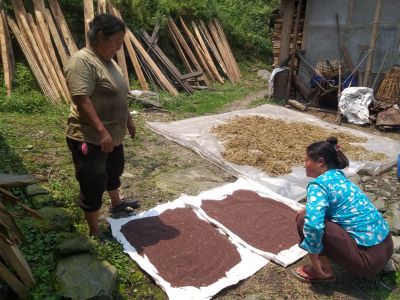
Recognizing these challenges as an opportunity, the ICAR Research Complex for North Eastern Hill Region, Sikkim Centre, launched a targeted intervention under the Tribal Sub Plan (TSP) in 2023. The initiative aimed not only to improve soil health through crop diversification but also to help tribal communities achieve localized self-reliance in organic edible oil production.
The Centre introduced frontline demonstrations of two improved rapeseed–mustard varieties—NRCHB 101, a late-sown Indian mustard variety maturing in 105–110 days, and NRCYS-05-02, a high-oil-content Yellow Sarson variety maturing in 110–115 days. Implemented in collaboration with line departments, the programme promoted rapeseed–mustard as an alternative winter crop to replace the existing pattern of subsistence cruciferous vegetable cultivation.
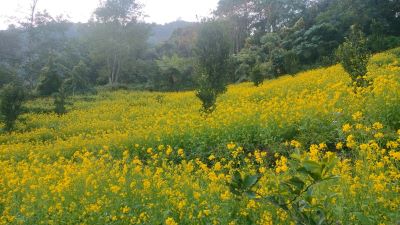
To support year-round cultivation, a gravity-based irrigation system using HDPE pipeline networks was established, ensuring reliable water availability for every participating tribal household. The intervention covered 15 Lepcha villages of Dzongu—Lingdong, Barfok, Hee Gyathang, Bringbong, Noom, Panam, Lingthem, Gor, Taryong, Gnon, Sangdong, Shagyong, Sangtok, Lingdem, Ruklu-Kayem and Laven—benefiting 234 tribal households.
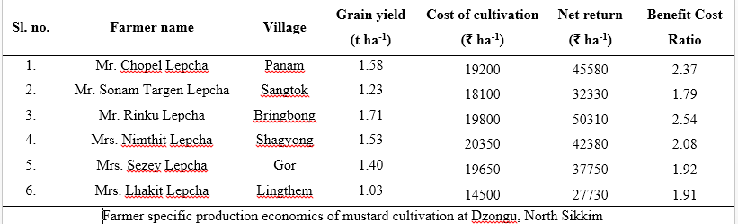
The results were highly encouraging. Organic seed yields ranged from 1.03 to 1.71 tonnes per hectare for NRCHB 101 and 1.01 to 1.52 tonnes per hectare for NRCYS-05-02. Farmers also realized attractive economic returns, with the benefit-cost ratio ranging between 1.79 and 2.37, making rapeseed–mustard cultivation a profitable enterprise.
Beyond productivity, the crop offered another significant advantage. Farmers observed that introducing rapeseed–mustard into crop rotations considerably reduced infestations of soil-borne pests in fields previously affected by continuous vegetable cultivation. This not only improved soil health but also restored the productivity of their farming systems.
Another longstanding challenge for the Lepcha farmers was the absence of nearby oil extraction facilities. Earlier, farmers had to travel nearly 50 kilometres to Singtam to process their limited quantities of organically grown mustard into edible oil, making production both time-consuming and expensive.
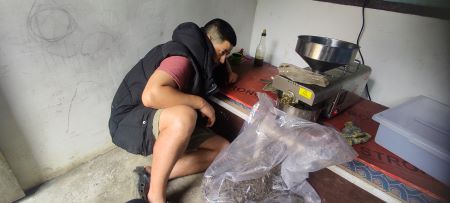
To address this critical post-harvest bottleneck, six community-based oil expeller machines were installed under the TSP programme at Kussong, Lingthem, Lingdem, Lingdong, Gor, Shagyong and Sangtok. Operated on a custom-hiring basis, these facilities enabled farmers to extract mustard oil within their own communities, significantly reducing costs while strengthening local value addition.
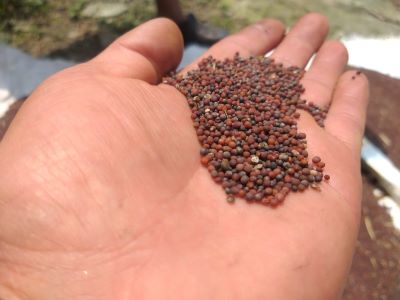
The impact extended far beyond oil extraction. The intervention enabled the Lepcha community to achieve localized self-sufficiency in household mustard oil consumption, reducing dependence on external supplies. Surplus organic mustard oil, after vacuum filtration at Lingdong village (Lower Dzongu), was packaged under local branding and marketed in the nearby Mangan Market, creating an additional source of income for farming families. Even the by-product found value, as the residual mustard oilcake was effectively utilized as nutritious livestock feed.
Today, organic rapeseed–mustard has emerged as much more than an alternative crop. It has become a sustainable crop rotation option that protects soils from pest infestations, improves farm profitability, strengthens local value chains and enhances household nutritional security. The success of the initiative has also encouraged the expansion of rapeseed–mustard cultivation as a cash crop beyond the TSP villages, benefiting other farming communities across Mangan District.
What began as an effort to address soil-borne pest problems and edible oil scarcity has evolved into a powerful model of localized self-reliance. Through scientific interventions, improved infrastructure and community participation, the Lepcha farmers of Dzongu have demonstrated how sustainable agriculture can simultaneously conserve natural resources, improve livelihoods and build resilient rural communities in the fragile Himalayan ecosystem.
((Source: ICAR Research Complex for NEH Sikkim center - Tadong, Department of Agriculture/ Horticulture, Govt. of Sikkim)


Like on Facebook
Subscribe on Youtube
Follow on X X
Like on instagram