

Poultry coccidiosis is an intestinal disease caused by intracellular protozoan parasites belonging to the genus Eimeria. Different Eimeria species vary in their pathogenicity and can cause different types and degrees of intestinal lesions. While infection with a single species is uncommon under natural conditions, mixed infections involving two or more species are frequently observed.
Coccidiosis is an enteric disease of major economic importance because it can result in significant production losses, high morbidity, bloody enteritis and mortality. The disease is characterised by depression, weakness, loss of appetite, ruffled feathers and, notably, bloody diarrhoea.
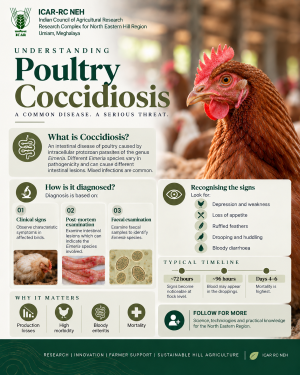
At flock level, signs may become noticeable around 72 hours after infection. Birds may become weak, stop feeding and huddle together, while blood can appear in the droppings by around 96 hours. Mortality is reported to be highest between the fourth and sixth days of infection.
Diagnosis is based on clinical signs and post-mortem examination, along with examination of faecal samples to identify Eimeria species. The location and nature of intestinal lesions can also provide an indication of the species involved.
Management and prevention focus on maintaining good farm hygiene and sanitation, keeping poultry houses and litter dry, regularly removing droppings, and taking appropriate measures to reduce contamination. The second episode also outlines treatment with anticoccidial medications and recommends practices such as switching drugs to help reduce the development of drug resistance.
(Source: ICAR-RC NEH, Umiam, Meghalaya)


फेसबुक पर लाइक करें
यूट्यूब पर सदस्यता लें
X पर फॉलो करना X
इंस्टाग्राम पर लाइक करें