


In the picturesque hills of Phek district, Nagaland, where agriculture is closely woven into the lives of rural communities, 38-year-old Vesalu Puro of Porba village is cultivating more than flowers she is cultivating an opportunity for sustainable livelihoods, women’s entrepreneurship and rural transformation.
Born into a farming family, Vesalu grew up watching her parents nurture the land. Inspired by their legacy and driven by her own passion for flowers, she ventured into floriculture in 2021 with a small initiative. What began as a modest flower-growing activity soon evolved into an ambitious commercial enterprise, driven by her keen understanding of a growing local demand for quality flowers for weddings, religious ceremonies, festivals and social occasions.
Yet, turning this opportunity into a profitable enterprise was not without challenges. Gladiolus cultivation in the region remained limited, largely because farmers had inadequate access to quality planting material and scientific production technologies. It was at this crucial juncture that scientific intervention opened a new pathway for Vesalu.
A Scientific Intervention that Changed the Course
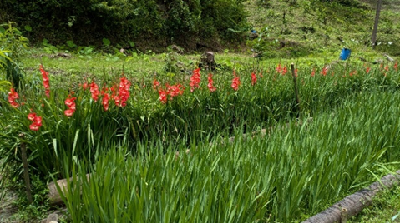
ICAR–Krishi Vigyan Kendra (KVK), Phek, Nagaland, introduced Vesalu to Arka Amar, a high-yielding gladiolus variety procured from ICAR–Indian Institute of Horticultural Research (IIHR), Bengaluru. Known for its attractive orange-coloured flower spikes, excellent vase life and strong market appeal, the variety offered the right combination of quality and commercial potential for the region.
The intervention went beyond simply providing planting material. Vesalu received 6,000 healthy corms along with hands-on training in scientific cultivation practices—from land preparation, optimum planting time and spacing to nutrient management, irrigation, staking, weed management and organic pest and disease management. She was also trained in harvesting at the right stage, post-harvest handling, grading of flower spikes and corm harvesting and storage.
Regular field visits and continuous technical guidance from ICAR–KVK, Phek scientists ensured that the crop was scientifically managed throughout its production cycle. With knowledge, quality planting material and sustained institutional support coming together, Vesalu was ready to turn her small plot into a promising commercial venture.
6,000 Corms, 5,400 Marketable Spikes—and a New Beginning
The results were striking.
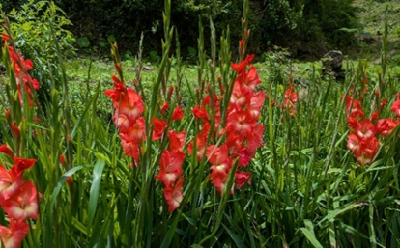
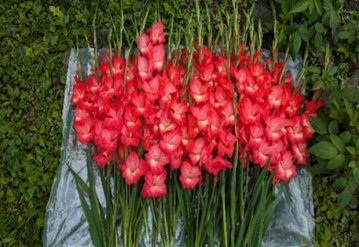
On just 0.25 acre, Vesalu planted 6,000 gladiolus corms and harvested nearly 5,400 marketable flower spikes. The flowers stood out for their attractive colour, long spikes, uniform florets and excellent vase life, making them highly sought after in local markets.
Her flowers found buyers across churches, hotels, florists, wedding ceremonies and various social and cultural events. The enterprise generated a reliable seasonal income, while the daughter corms harvested after flowering provided quality planting material for subsequent seasons and opened an additional avenue for income generation.
The economics demonstrated the commercial viability of the intervention. With an average selling price of ₹15 per spike, Vesalu earned a gross income of ₹81,000 from the 0.25-acre crop against a cultivation cost of ₹28,930, resulting in a net income of ₹52,070 and a Benefit–Cost Ratio of 2.80:1.But for Vesalu, the success of Arka Amar was not an end it was the beginning of something much bigger.
From Gladiolus to a Diverse Fresh-Cut Flower Enterprise
Encouraged by the success of gladiolus, Vesalu gradually expanded and diversified her farm into a modern fresh-cut flower enterprise. Today, her farm produces an impressive range of seasonal and perennial flowers suited to Nagaland’s temperate climate, including hydrangeas, peonies, delphiniums, stocks, eucalyptus and gladiolus, along with several other premium fresh-cut varieties.
With an eye for changing consumer preferences, she continuously introduces new and unique flowers by sourcing quality seeds, bulbs and planting materials from reputed domestic suppliers as well as selected imported collections.
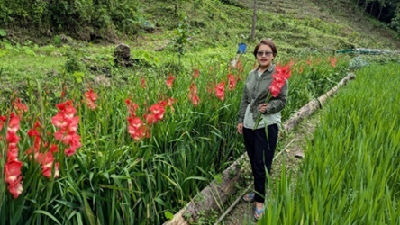
Her market has grown alongside her enterprise. Flowers that once served local demand are now reaching customers beyond Nagaland, with supplies extending to Mumbai, Delhi and neighbouring states. She also procures flowers from fellow growers, thereby expanding her product range while creating market opportunities for other local flower producers.
Science, Enterprise and Market Linkages Come Together
The transformation has been strengthened by sustained institutional support. The consistent technical guidance of ICAR–KVK, Phek, together with support from the CSIR–NEIST Jorhat Floriculture Mission, has helped Vesalu improve scientific cultivation practices, quality production, enterprise management and market linkages.
Her farm has consequently evolved beyond a production unit. Surrounded by Nagaland’s scenic landscape and colourful blooms, it is emerging as an agro-tourism destination, attracting visitors interested in experiencing flower farming.
Vesalu also conducts educational visits and interactive sessions for school and college students, using her farm as a living classroom to create awareness about floriculture, sustainable agriculture, entrepreneurship and the importance of farming among the younger generation.
A Small Plot, a ₹5 Lakh Enterprise and a Bigger Social Impact
The impact of Vesalu’s journey extends well beyond her own farm.
What began as a small flower garden has grown into a successful commercial enterprise with an annual turnover of approximately ₹5 lakh. The venture now provides regular household income, generates seasonal employment for family members and local labourers, and has strengthened Vesalu’s position as a woman entrepreneur in rural Nagaland.
At the same time, her locally produced flowers are helping reduce dependence on flowers brought in from other states, strengthening local availability and creating new opportunities within the regional flower economy. The enterprise has also contributed to agro-tourism, provided educational exposure to students and encouraged neighbouring farmers to explore commercial floriculture.
From Farmer to Inspiration
Vesalu’s success has changed not only the scale of her farm but also the way she sees its future. Encouraged by the performance of Arka Amar, she plans to expand gladiolus cultivation, produce quality corms for commercial sale, introduce more high-value cut flowers, strengthen market linkages and further develop agro-tourism activities.
More importantly, she has become an advocate for floriculture among women farmers and rural youth, sharing her experience and encouraging others to view flower cultivation not merely as farming, but as a viable and rewarding enterprise.
Vesalu Puro’s journey is a compelling example of what can happen when scientific knowledge meets quality planting material, institutional support and entrepreneurial vision. From 6,000 gladiolus corms on a quarter-acre plot to a diversified flower enterprise supplying major cities, her story demonstrates that even small landholdings can become engines of income, employment and rural enterprise.
In the hills of Nagaland, Vesalu is proving that with the right technology, the right support and the courage to innovate, a small farm can blossom into something far greater a profitable enterprise, a source of local opportunity and an inspiration for an entire community.


Like on Facebook
Subscribe on Youtube
Follow on X X
Like on instagram